 ®
®







.jpg)








Basic Seat Landings
 Seat
Landing
Seat
Landing
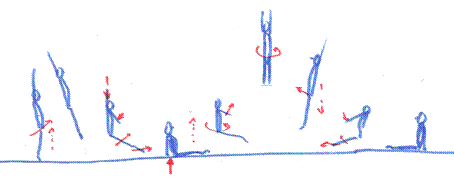
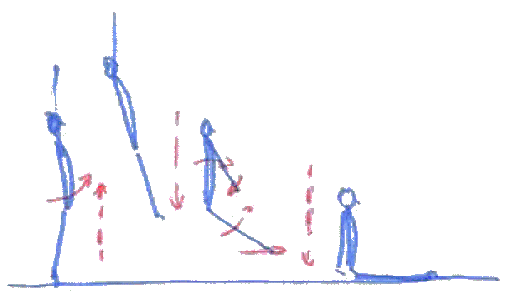
The most important parts of this move are to keep straight legs, do not lift them up and to jump upwards first – it is tempting to ‘drop backwards’ or just lift your legs up but this is absolutely not what we want. Instead we need you to reach high and tilt your pelvis upwards slightly (still keeping your head and arms above your toes) as you leave the bed – this causes a very small amount of somersault rotation! As you come back towards the bed you start to prepare for landing by bringing your arms down to a position ready to be placed just behind your seat and extend your feet forwards. You should land with your back close to upright and hands tucked in just behind your seat with your fingers facing the same way as your toes.
 Seat
Landing ½ Twist to Feet
Seat
Landing ½ Twist to Feet
Starting from a good seat landing this simply needs you to reach up high with a good push upwards from the bed; as you are reaching up you should start to twist at the shoulder by extending one arm into the twist more than other. As you become fully straight the twist will accelerate (as an ice-skater does when bringing in their arms for a spin) and so you then bring your arms back down ready for a stable upright landing.
Swivel Hips (also called Seat Landing, ½ Twist to Seat Landing)
This move builds on the Seat Landing (also known as Seat Drop) and Seat Landing, ½ twist to feet above – indeed right up until a point shortly before your feet would have touched down it is almost identical to the Seat Landing, ½ twist to feet. Having followed the notes above for the beginning part of this move we find ourselves where we are nearly upright in the air with straight legs and have virtually completed the twist – at this point we push our hips upwards allowing the body to tilt slightly and extend our legs forwards (toes pointed). After that we are now heading for a seat landing rather than feet and so bring our hands back down to place them just behind our seat. At no point should the legs bend in this exercise.